Commercial EICR: What to Expect
A Commercial Electrical Installation Condition Report (EICR) is a formal inspection and test of your property's fixed electrical installation. It is a legal requirement for most commercial premises and rental properties, and it gives you a documented record of the condition of your electrical system. This guide explains what you can expect when you book a commercial EICR with EPM.
Before Your Appointment
If you have a previous EICR or an electrical circuit schedule for the property, have it available on the day. It is not essential, but it helps the engineer work through the installation more efficiently.
Think about access ahead of the visit. The engineer will need to reach all distribution boards, consumer units, and electrical panels on the premises. If any are in locked plant rooms, cupboards, or restricted areas, arrange access before the appointment.
It is worth letting relevant staff know the visit is taking place. The engineer will need to isolate circuits briefly during testing, which may affect lighting, sockets, or equipment in parts of the building.
What Happens During the Visit
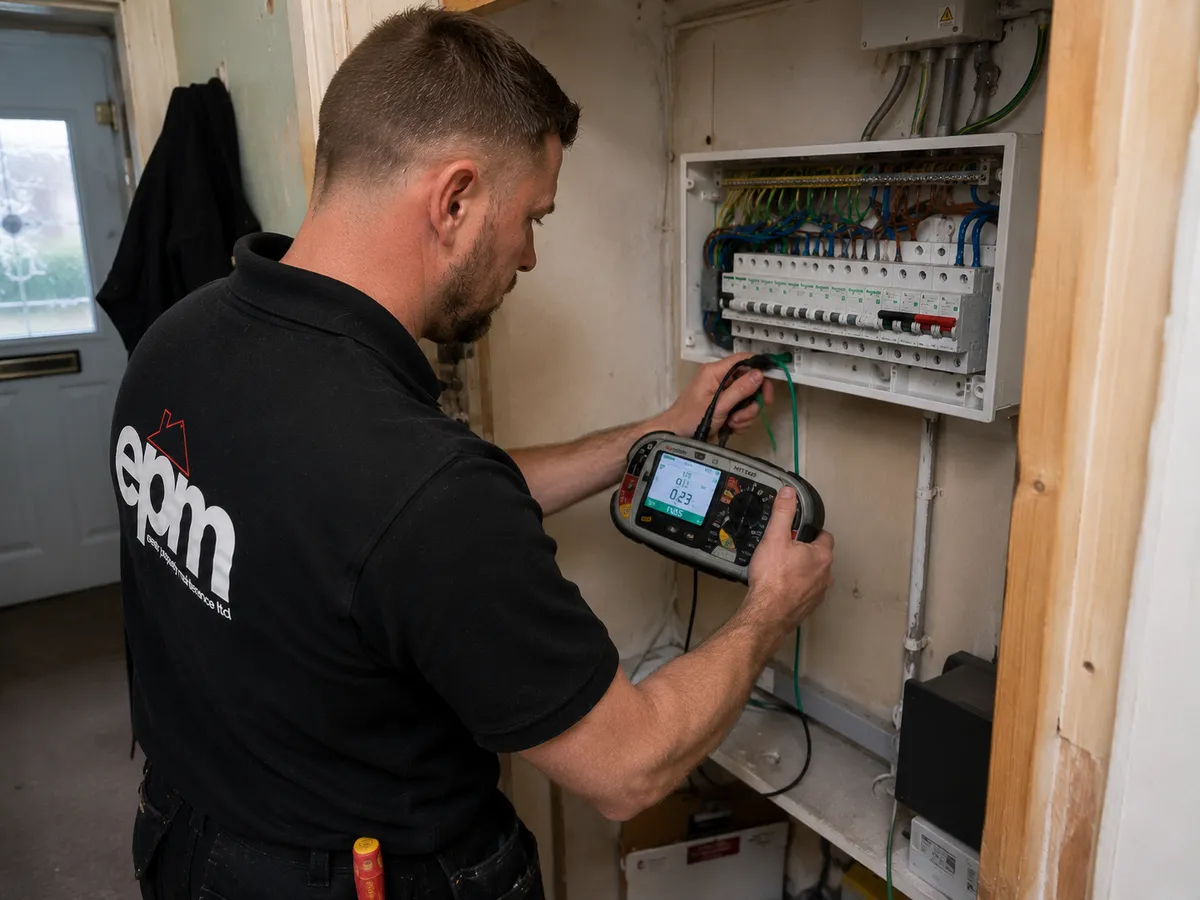
The engineer will start with a visual inspection of the accessible electrical installation across the property. This covers distribution boards, wiring, sockets, switches, light fittings, and any other fixed electrical equipment.
Circuit testing follows. Each circuit is tested individually using specialist equipment to check it is performing safely and within the required parameters. Circuits will need to be isolated briefly during this process. The engineer will communicate clearly before isolating anything so disruption can be managed.
Larger commercial premises with multiple distribution boards will take longer, as each board and its associated circuits needs to be worked through in turn.
Once testing is complete, the engineer will produce an EICR report. This grades any observations found:
- C1: immediate danger present. Must be made safe before the engineer leaves or the installation is taken out of use.
- C2: potential danger. Remedial work required as soon as possible.
- C3: improvement recommended. Not a safety issue, but worth addressing.
- FI: further investigation required.
If no C1 or C2 observations are found, the installation receives a satisfactory result and the report is valid for the recommended period, typically five years for commercial premises.
Before leaving, the engineer will make sure the work area is left clean and tidy and answer any questions you may have.
How Long Does It Usually Take
This varies considerably depending on the size and complexity of the property. A small office or retail unit may take three to four hours. Larger commercial premises with multiple distribution boards, three-phase supply, or extensive lighting circuits can take a full day or more. For bigger properties the inspection may be carried out across multiple days. When you enquire, give us an idea of the property size and we will give you a realistic time estimate before you book.
Things That Could Affect the Job
- Number of distribution boards and circuits in the property
- Whether the property has three-phase supply
- Access to all areas of the electrical installation
- Age and condition of the existing installation
- Whether previous inspection records are available
- C1 observations found during testing that require immediate remedial action
Frequently Asked Questions
Do we need to close during the EICR?
Not necessarily. For many smaller commercial premises the engineer can work around normal operations. However, circuit isolation is unavoidable during testing, and in some cases this may affect parts of the building temporarily. Discuss your trading requirements when you book and we will plan the visit accordingly.
How often does a commercial property need an EICR?
For most commercial premises, every five years is the standard recommendation. The previous EICR will state the recommended interval, and that takes precedence. Rented commercial properties should also have a valid EICR in place before a new tenancy begins.
What happens if the report finds problems?
C1 observations are addressed before the engineer leaves or the installation is taken out of use. C2 observations require remedial work to be carried out as soon as possible. EPM can carry out remedial work and issue a minor works certificate once complete. C3 observations are recommendations only and do not affect the outcome of the report.
Who receives the EICR certificate?
The report is issued to the property owner or the person who commissioned the inspection. If you are a tenant, check with your landlord about who is responsible for commissioning the EICR.
Key Points
Typical appointment: Half a day to multiple days depending on property size
Engineer required: Registered electrician
Typical visits: 1 for the inspection, plus a return visit if remedial work is required
Materials: None for the inspection. Materials required for any C1 or C2 remedial work identified.
Property disruption: Circuits isolated briefly during testing
Access required: All distribution boards, consumer units, and electrical panels
