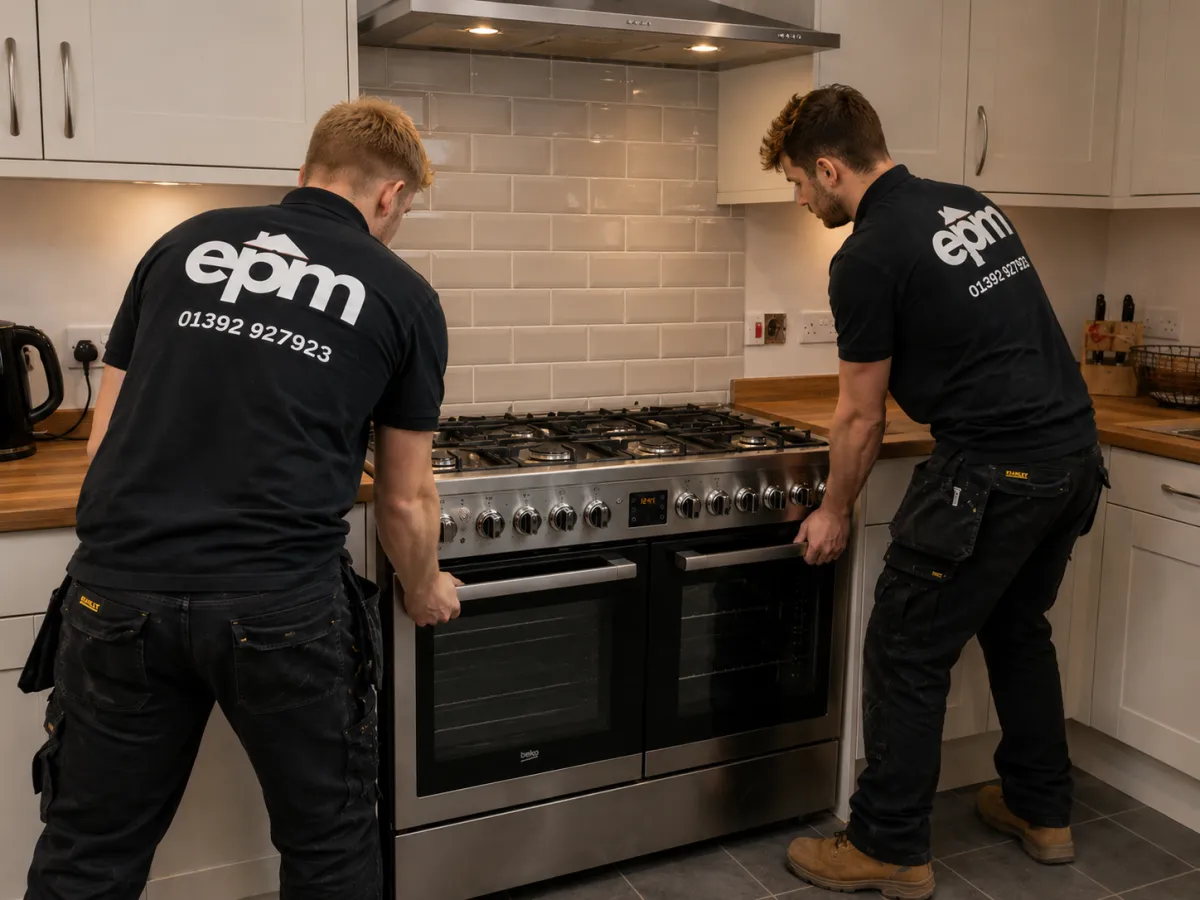
Dual Fuel Oven Installation – What to Expect
Installing a dual fuel oven requires both a qualified gas engineer and an electrician to ensure the appliance is connected safely, tested correctly and commissioned in accordance with current regulations.
Whether you're replacing an existing cooker or fitting a new appliance, this guide explains what you can expect when you book a dual fuel oven installation with EPM.
Before Your Appointment
There's very little you need to do before we arrive.
Please make sure your new oven is available at the property before the appointment.
If you've asked us to remove your old oven, please let us know when booking so we can allow enough time and make arrangements for disposal.
It can also be helpful to:
Empty the existing oven before our arrival.
Ensure there is a clear route to move the appliance in and out of the property.
Let us know about any parking restrictions or access instructions when booking.
This guide assumes your appliance is designed to run on natural gas supplied from a gas meter. We don't currently install LPG or oil-fired cookers.
What Happens During the Visit?
Your installation may be carried out by a gas engineer and electrician working together or attending separately during the appointment.
Between them, they'll disconnect the existing appliance, safely isolate the gas and electrical supplies and install the new oven.
The gas supply to the property will be temporarily turned off while the required gas tightness testing is carried out. The electrical supply to the cooker circuit will also be safely isolated while the oven is connected.
Once installed, the appliance will be fully commissioned. This includes carrying out the required gas tightness testing, checking the gas connection, testing the electrical connection and confirming the oven is operating correctly before it is handed over to you.
Before leaving, the engineers will answer any questions you may have and leave the work area clean and tidy.
How Long Does It Usually Take?
A straightforward dual fuel oven installation typically takes around 2 hours.
The work involves both a qualified gas engineer and an electrician. Depending on scheduling, they may attend together or separately during the appointment.
The exact time can vary depending on the appliance, ease of access and whether any alterations to the existing gas or electrical supplies are required.
Things That Could Affect the Job
While most dual fuel oven installations are straightforward, every property is different. Occasionally we may find:
The existing gas supply isn't suitable for the new appliance.
The existing electrical supply requires alteration before the oven can be connected safely.
The new appliance doesn't fit the available space.
Additional work is required to connect the appliance safely.
Existing gas or electrical faults are identified during testing.
Minor adjustments are often part of the job and can usually be completed during the visit. If we discover anything that significantly changes the scope of work, we'll explain the available options before carrying out any additional work.
Frequently Asked Questions
Will my gas and power need to be turned off?
Yes. The gas supply to the property will be temporarily turned off while the required gas safety testing is carried out. Usually only the electrical supply to the cooker circuit will be isolated while the oven is connected.
Can you remove my old oven?
Yes. We can disconnect and dispose of your old oven if this has been arranged before the appointment.
Can I supply my own oven?
Yes. We're happy to install customer-supplied dual fuel ovens, provided they're suitable for the existing gas and electrical supplies.
Will the new oven be tested before you leave?
Yes. We'll carry out the necessary gas and electrical testing before confirming the appliance is operating safely and correctly.
Key Points
Typical appointment: Around 2 hours
Engineers required: One gas engineer and one electrician
Typical visits: Usually one
Materials: Connection materials are normally carried as van stock. The oven can be customer supplied or sourced by EPM.
Property disruption: The gas supply will be temporarily turned off while gas safety testing is carried out. Usually only the cooker electrical supply will be isolated during the installation.
Access required: Clear access to the kitchen, the existing cooker and a suitable route for moving the appliance. Please let us know in advance if you'd like your old oven removed.
