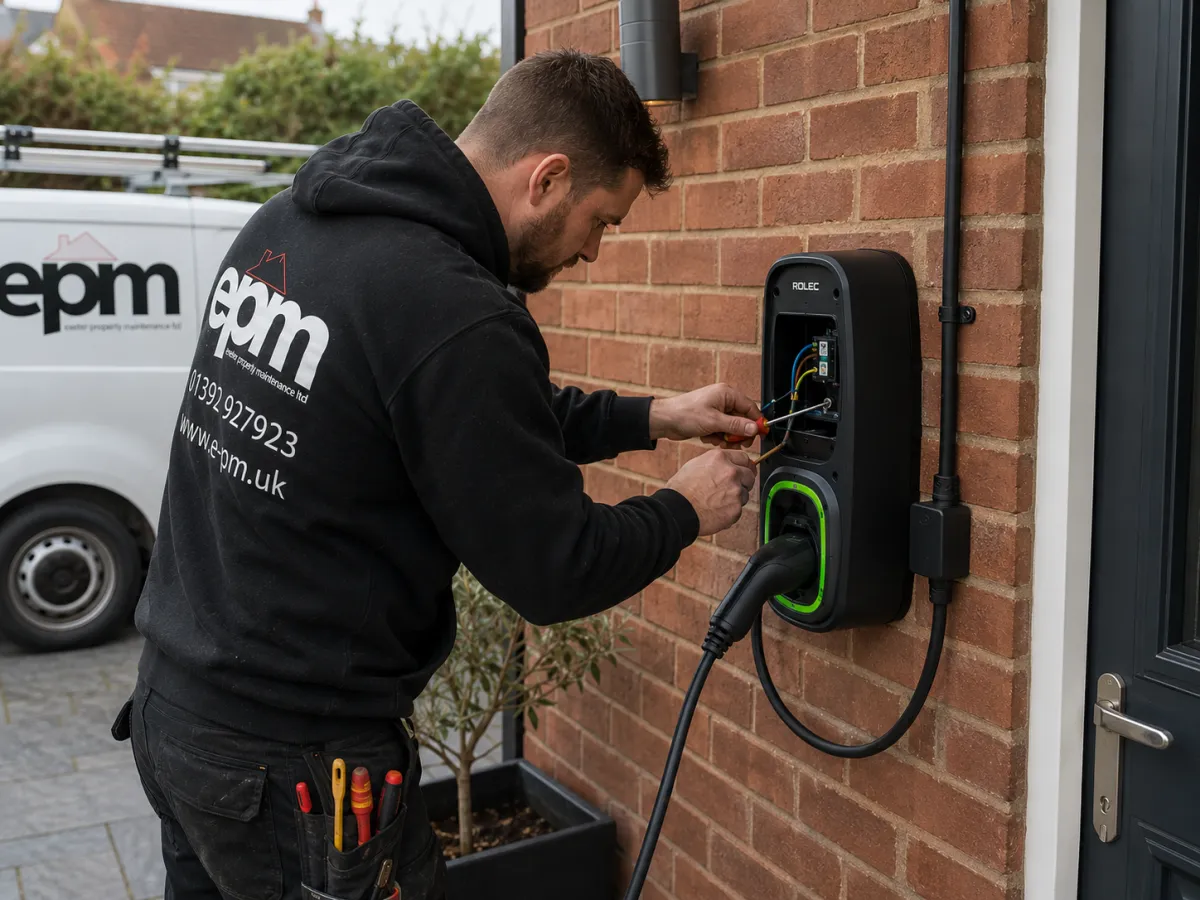
EV Charger Installation: What to Expect
Installing a home EV charger is one of those jobs that sounds more involved than it usually is. A dedicated charger is significantly faster than a standard three-pin socket, and most domestic installations are straightforward. This guide explains what you can expect when you book an EV charger installation with EPM.
Before Your Appointment
Before the engineer arrives, it is worth thinking about where you want the charger positioned. Most are fitted on an exterior wall near the driveway or in a garage. The closer the installation point is to your consumer unit, the more straightforward the cable run will be.
Make sure the area around your consumer unit is accessible on the day. The engineer will need to connect a dedicated circuit, so clear any storage or clutter that might be in the way.
Someone will need to be available to provide access to both the consumer unit and the installation point.
What Happens During the Visit
The engineer will start by assessing the installation point and checking your consumer unit to confirm it has a spare way for a new dedicated circuit.
A cable is then run from the consumer unit to the charger location. The route depends on your property: through the wall, along external trunking, or through a garage. The engineer will take the most practical and tidy route available.
Once the cable run is complete, the charger unit is mounted and connected. The engineer will briefly isolate power to your consumer unit during the connection. This is short and unavoidable, and they will let you know before it happens.
The installation is then tested to confirm everything is working correctly. Before leaving, the engineer will make sure the work area is left clean and tidy and answer any questions you may have.
How Long Does It Usually Take
Most EV charger installations take between three and five hours. More complex jobs can take longer. If you have a longer cable run, solid masonry walls, or any work needed at the consumer unit, the engineer will give you a clearer picture on the day.
Things That Could Affect the Job
- Distance between your consumer unit and the installation point
- Whether there is a spare way in the consumer unit for a new circuit
- Wall construction: cavity walls are quicker to run cables through than solid masonry
- The length of any external cable run
- Additional earthing or bonding requirements identified during the visit
Frequently Asked Questions
Do I need to do anything with my electricity supplier before getting a charger fitted?
No. The engineer handles the installation and certification. You don't need to contact your energy supplier beforehand, though some people choose to switch to an EV-friendly tariff around the same time.
Will my power be cut off during the installation?
Briefly, yes. The engineer needs to isolate the consumer unit to connect the new circuit. This is a short interruption and the engineer will let you know before it happens.
Do I need planning permission?
For most domestic EV charger installations, planning permission is not required. Listed buildings and some conservation areas may have restrictions, so it is worth checking with your local authority if you are unsure.
Can you install any make of charger?
Speak to us when you enquire and we can advise on what works for your setup.
Key Points
Typical appointment: 3 to 5 hours
Engineer required: Registered electrician
Typical visits: 1
Materials: Charger unit, dedicated circuit cable, consumer unit MCB
Property disruption: Brief power interruption during consumer unit connection
Access required: Consumer unit and charger installation point
