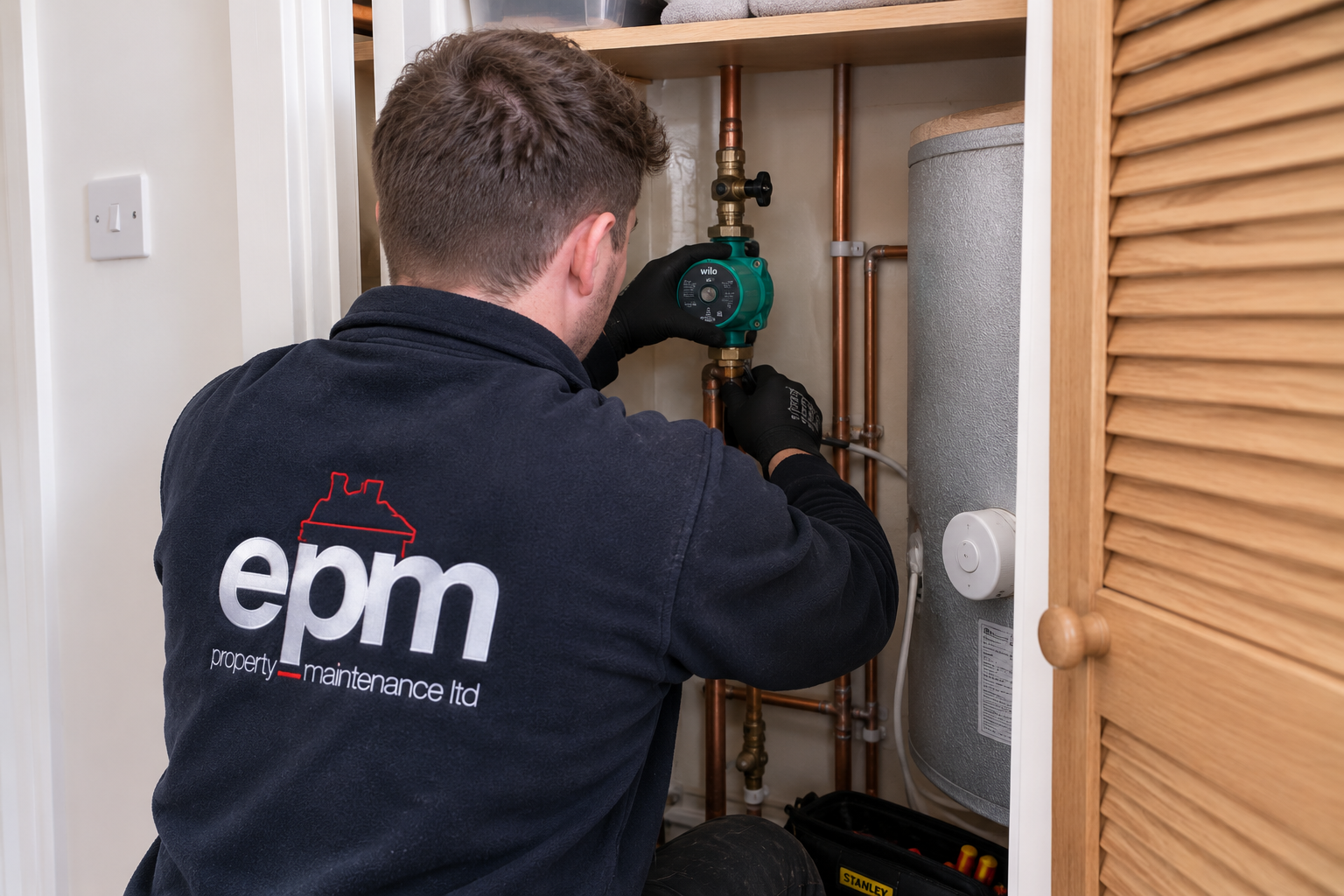
External Circulating Pump Replacement – What to Expect
External Circulating Pump Replacement – What to Expect
If your heating system isn't circulating hot water properly, radiators are staying cold, or the circulating pump has become noisy or seized, replacing the external circulating pump may be the best solution.
Most external circulating pump replacements can be completed during a single visit. Where isolation valves are fitted and working correctly, the replacement is often straightforward. This guide explains what you can expect when you book an External Circulating Pump Replacement with EPM.
Before Your Appointment
To help us prepare for your appointment, it is helpful if you can provide:
A photograph of the existing circulating pump, if accessible.
Details of any noises, leaks or heating issues you have noticed.
The make and model of the existing pump, if known.
Please ensure there is clear access to the circulating pump before the engineer arrives. These are commonly located in an airing cupboard, plant room or adjacent to the hot water cylinder.
If there are any parking restrictions or access instructions, please let us know before the appointment.
What Happens During the Visit?
When the engineer arrives, they'll first confirm that the circulating pump requires replacement and inspect the existing installation.
If the pump isolation valves are working correctly, the existing pump can usually be replaced without draining the heating system.
If the isolation valves are not operating correctly or are not fitted, the heating system will need to be drained before the replacement can be carried out.
Once the new pump has been installed, the heating system will be refilled where required, vented, repressurised and tested to ensure it is circulating correctly and that there are no leaks before the engineer leaves.
How Long Does It Usually Take?
A straightforward pump replacement using working isolation valves is typically completed within around 1 hour.
If the heating system needs to be drained and refilled, the appointment is usually around 2 hours, depending on the size of the property and heating system.
Things That Could Affect the Job
While many pump replacements are straightforward, occasionally we may find:
The pump isolation valves are seized or leaking and require replacement.
The heating system needs to be drained before the pump can be removed.
Existing pipework or fittings are corroded and require repair.
Restricted access makes replacing the pump more time consuming.
Additional faults within the heating system are identified during testing.
If we discover anything that significantly changes the scope of work, we'll explain our findings and discuss the available options before carrying out any additional work.
Frequently Asked Questions
Can you replace the pump without draining the heating system?
Yes. If the existing pump isolation valves are fitted and operating correctly, the pump can often be replaced without draining the system.
What if the pump valves don't work?
The heating system will need to be drained before the pump can be replaced.
Will I be without heating during the work?
Yes. Your heating system will be temporarily switched off while the replacement is carried out and tested.
Will you test the heating afterwards?
Yes. We'll check the new pump is operating correctly, ensure the heating system is circulating properly and confirm there are no leaks before leaving.
Key Points
Typical appointment: Around 1 hour where pump isolation valves are operational. Around 2 hours if the heating system requires draining and refilling.
Engineer required: One plumbing and heating engineer.
Typical visits: One visit for most replacements.
Materials: Replacement circulating pump and associated fittings where required.
Property disruption: Heating will be temporarily switched off during the replacement. If the system is drained, it will be refilled, vented and tested before the engineer leaves.
Access required: Clear access to the circulating pump and surrounding working area before the engineer arrives.