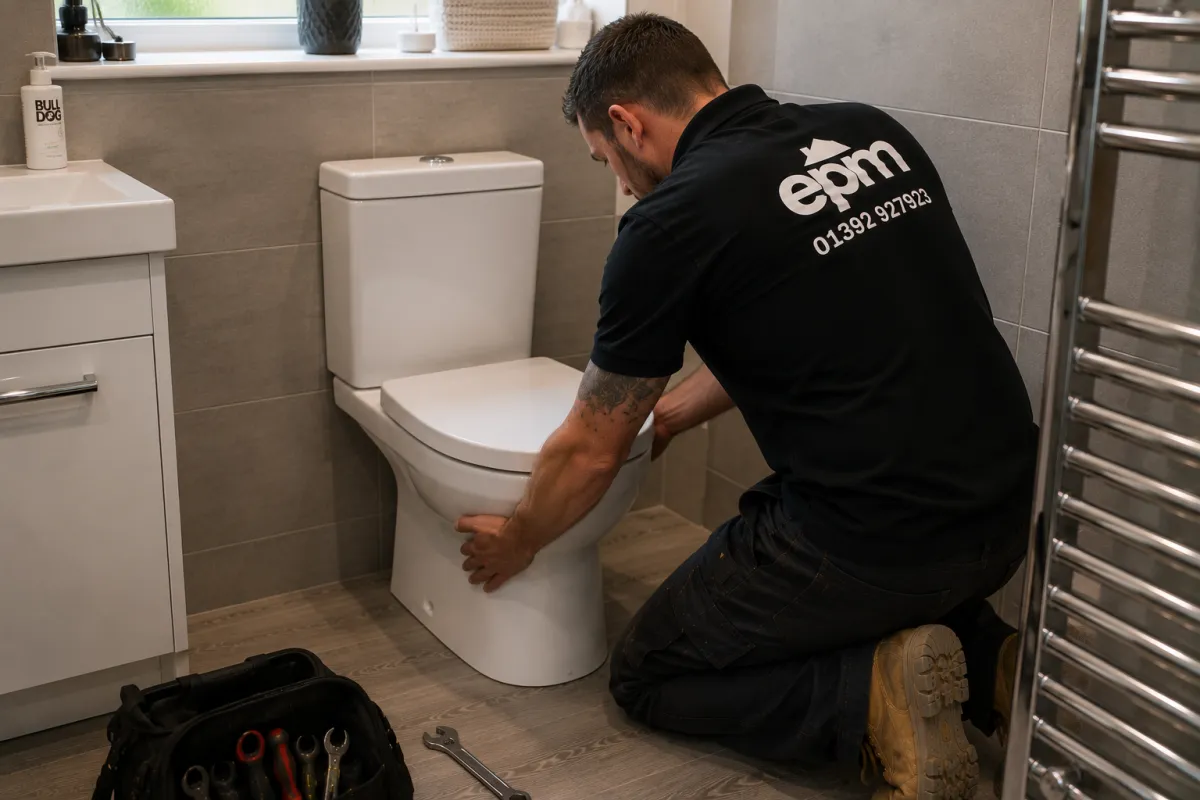
Toilet Replacement: What to Expect
A toilet that's cracked, leaking at the base or simply worn out isn't something you can put off for long. Replacing it is a job we do regularly, and it's usually more straightforward than people expect. This guide explains what you can expect when you book a toilet replacement with EPM.
Before Your Appointment
You can supply the new toilet yourself or we can supply it for you. If you're supplying it, make sure it's in the property before the appointment. If you'd like us to supply it, let the office know when you book.
If you're supplying the toilet, let us know whether you'd like the old one taken away, so we can agree that in advance.
Clear the space around the toilet so the engineer has room to work. You don't need to be at home, you just need to provide access.
If you have a wall-hung toilet or one with a concealed cistern, let the office know when you book, as these can take longer.
What Happens During the Visit
The engineer will start by checking how the existing toilet is connected and where the water can be isolated. Where there's a working isolation valve on the toilet, only that supply is turned off. If there isn't one, or it isn't working, the mains supply will need to be turned off for a short time. Where no valve is fitted, we'll fit one where possible as part of the job.
The old toilet is then disconnected. Unless you've agreed otherwise, we'll take it away with us.
The new toilet is positioned, secured and connected to the waste and water supply. We'll often replace the pan connector as part of the job, and the flexible hose may be replaced too where it needs it. Once it's connected, the engineer will flush it and check all the joints for leaks.
Minor incidentals such as worn fittings will be dealt with as part of the job, and you'll be told before the engineer leaves. If anything more significant comes to light, we'll flag it with you before proceeding.
Before leaving, the engineer will make sure the work area is left clean and tidy and answer any questions you may have.
How Long Does It Usually Take
One engineer, around two hours. That can vary depending on the toilet being fitted and what's found when the old one comes out.
Things That Could Affect the Job
- Wall-hung toilets and concealed cisterns, which usually take longer and can need more than one visit
- The waste outlet being in a different position to the new toilet
- Old or worn pipework that needs attention before the new toilet can be fitted
- No working isolation valve, which means the mains supply has to be turned off
- Limited access around the toilet
Frequently Asked Questions
Do I need to supply the toilet myself?
No. You can supply it, or we can supply it for you. Let the office know when you book.
Will you take the old toilet away?
Usually, yes. If you've supplied the toilet yourself, we'll agree with you beforehand whether we remove the old one or leave it with you.
Will my water be off?
Where the toilet has a working isolation valve, only that supply is turned off. If it doesn't, the mains will need to be off for a short time while the work is done.
Can you fit a wall-hung toilet or one with a concealed cistern?
Yes. These are more involved than a standard toilet, so let the office know at the time of booking.
Do I need to be at home?
No. We just need access to the property.
Key Points
Typical appointment: Around 2 hours, varying with the toilet being fitted
Engineer required: One plumber
Typical visits: One for a standard toilet. Wall-hung and concealed cistern toilets may need more.
Materials: Pan connector usually replaced. Flexible hose and isolation valve fitted or replaced where needed.
Property disruption: Local water supply isolated where a valve is fitted. Mains turned off briefly if not.
Access required: Bathroom and access to the toilet
