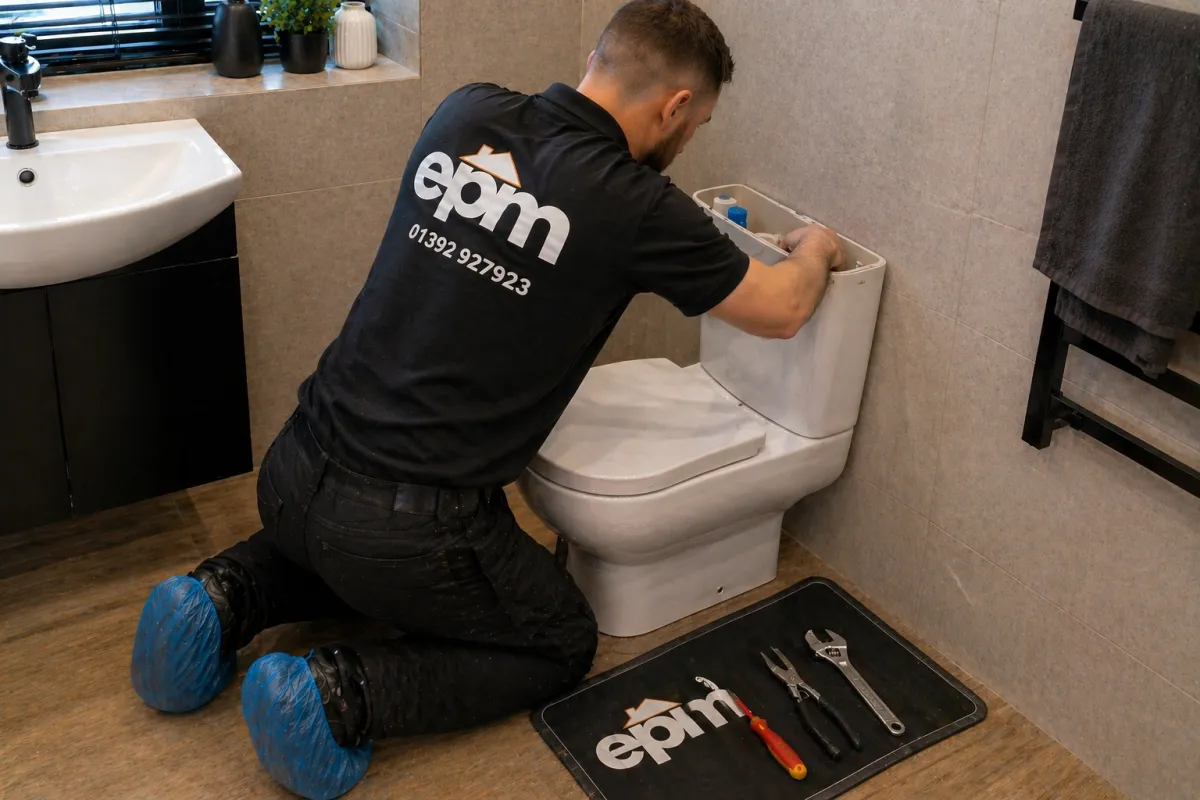
Can I Replace a Toilet Myself?
Yes, plenty of people do. Whether you should depends on what's behind the old one.
It's at its most straightforward when you're replacing like for like. A standard floor-standing toilet, the new one the same type as the old, the waste outlet in the same place, and a working isolation valve on the water supply. Turn the valve off, disconnect, lift out the old toilet, fit the new one, reconnect, and check it for leaks. Done carefully, that's a manageable afternoon.
The trouble starts when one of those things isn't true.
A lot of toilets don't have an isolation valve. Without one, you have to turn the mains off to the whole house to do the job, and if the stopcock hasn't been turned in years, finding out it won't shut fully is not how you want to start.
The pan connector is the other regular problem. It's the piece that joins the toilet to the waste pipe, and the old one often won't come away cleanly. Fitting the new toilet onto a connector that isn't right is the most common reason a toilet leaks at the back.
That matters because a small leak at the waste doesn't announce itself. It can run for weeks before it shows up as a stain on the ceiling below, and by then the damage is bigger than the toilet.
If the new toilet has its waste in a different position to the old one, the job changes again. Wall-hung toilets and concealed cisterns are a different job altogether, with a frame behind the wall and much less room for mistakes.
And there's the old toilet itself. It's heavy and awkward, and you need somewhere to put it.
If you can see a working isolation valve, you're swapping like for like and you're comfortable with a spanner, have a go. If you're not sure what you'll find when it comes out, or the toilet is wall-hung or concealed, it's usually worth having it done properly the first time.
If you'd rather see what having it fitted involves, the guide below covers it.
