Why Is My Toilet Running Constantly?
Because something inside your cistern has worn out. It's almost always the fill valve or the flush seal, the parts that control when water enters the cistern and when it stops. When either fails, the water keeps moving when it shouldn't.
The Most Likely Culprit
There are two components that cause most running toilet faults. The fill valve controls the incoming water supply. When it wears, it either doesn't cut off cleanly or lets water run above the correct level, which then drains away through the overflow. The flush valve or siphon controls the water going out into the pan. When its seal perishes, water trickles slowly from the cistern, sometimes quietly enough that you'd only spot it by checking the pan.
You'll usually know something is wrong because the cistern refills on its own when nobody has flushed, or there's a constant hiss or trickle that doesn't stop. If a pipe is dripping outside the property, that's the overflow telling you the cistern is overfilling.
It Won't Fix Itself, and It's Costing You Water
Most people hear it, note it, and get on with their day. The problem is it doesn't stop, and in most cases it gets worse. A running toilet can waste several hundred litres of water a day. On a water meter, that shows up in your bills.
The component isn't going to reseat itself. It needs replacing.
Can You Fix It Yourself?
Some people can. Fill valves and flush seals are inexpensive and available from most plumber's merchants. If you're comfortable with basic plumbing, it's a manageable job on a standard toilet.
The first thing to check is whether you have an isolation valve on the supply pipe to the cistern. Not all toilets do, and the type varies. If there's no valve, or it's seized, the mains will need to come off before any work can start.
Concealed cisterns, the kind built into the wall behind a panel, are a different matter. Access is more limited, the components are often proprietary, and parts usually need to be ordered rather than picked up from a local merchant. If you've got a wall-hung toilet, it's generally worth calling a plumber rather than attempting it yourself.
What a Plumber Does
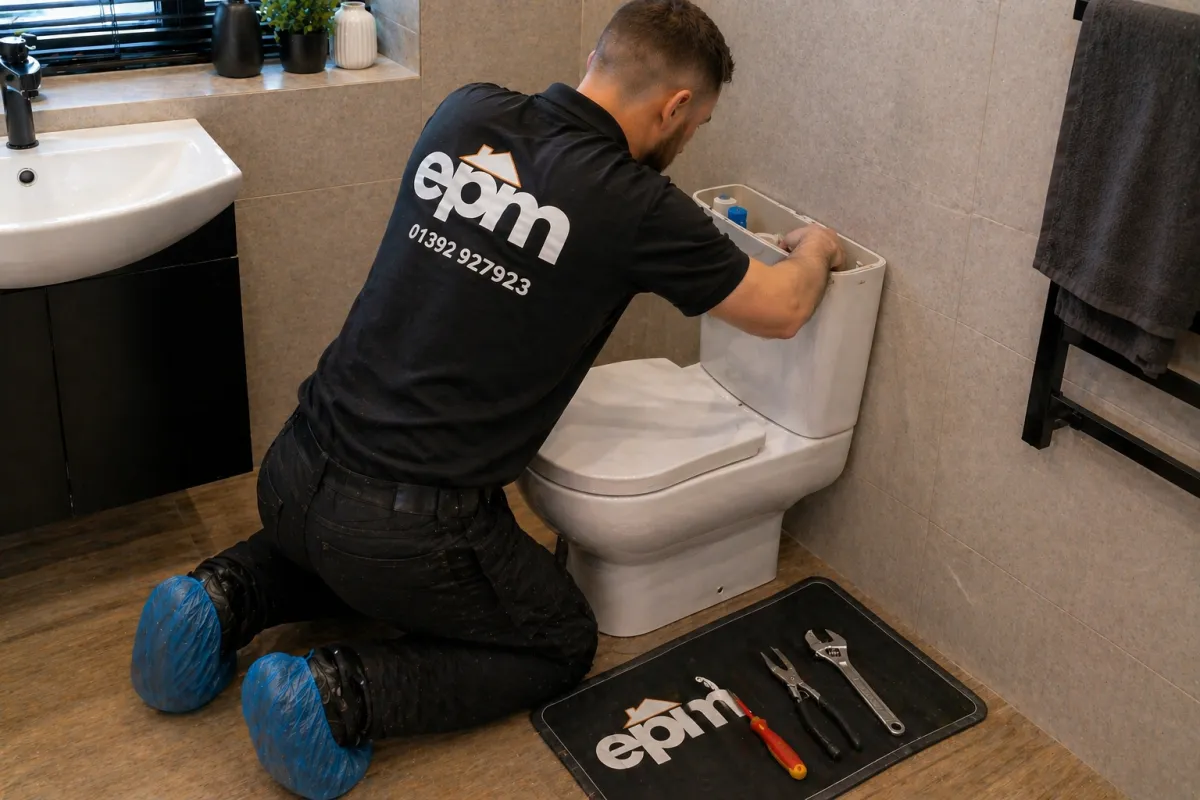
A plumber will identify which component has failed and replace it. For a standard toilet this is usually done in a single visit, with common parts carried on the van. If there's no working isolation valve, one will be fitted as part of the job.
For concealed cisterns, parts may need to be ordered and a return visit arranged. That will be confirmed on the day once the engineer has assessed the setup.
It's not a big job on a standard toilet. It just needs doing.
If you'd like to know exactly what to expect when you book a toilet repair with EPM, our guide covers the full process from start to finish.
