Knowledge Centre
Helpful guides & expert advice
Practical advice, how-to-guides and expert insights to help you look after
your home and make informed decisions

4.9 ★ rated • 250+ Google Reviews
Browse by category







Browse all articles
PAT Testing: What to Expect
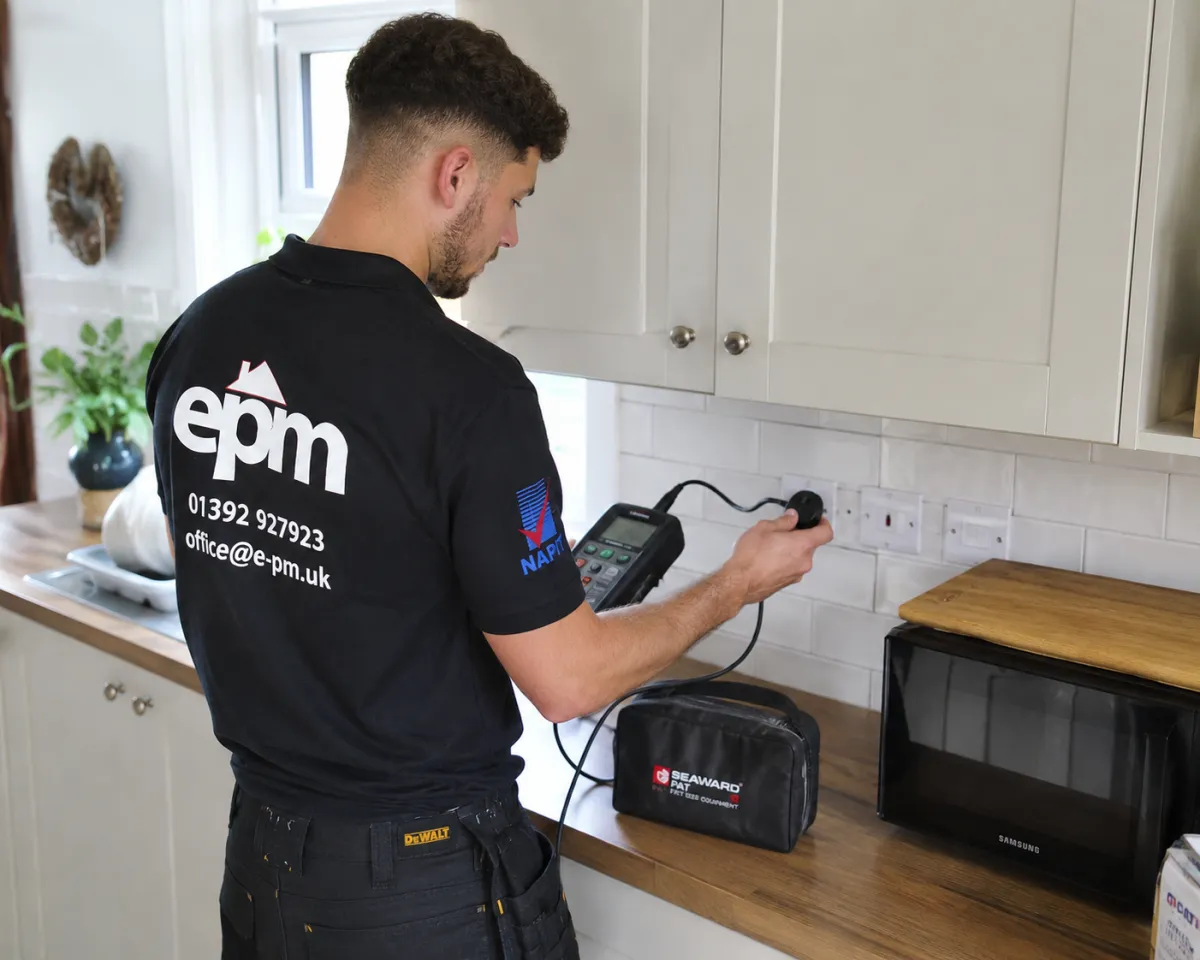
PAT testing checks that portable electrical appliances are safe to use. Whether you're a landlord meeting your compliance obligations, a business ensuring workplace safety, or a property owner looking after tenants, a routine test is the most reliable way to confirm that the appliances in your building are in safe working order. This guide explains what you can expect when you book PAT testing with EPM.
Before Your Appointment
When you book, it's helpful to give us a rough count of the appliances you'd like tested. It doesn't need to be exact, but a broad estimate helps us allocate the right amount of time for the visit.
Make sure all appliances are accessible on the day. Items that are locked away, stored, or in areas that won't be open to the engineer will need to be made available. For commercial premises, letting us know about any secured areas or access requirements at booking will help the visit run smoothly.
Let us know about any parking restrictions or site access requirements in advance.
What Happens During the Visit
The engineer will work through each appliance systematically, testing the plug, lead, and the appliance itself using PAT testing equipment. The tests check for faults that aren't visible externally, including insulation issues and earth continuity problems.
Each appliance that passes is given a dated pass label. Any item that fails receives a fail label and should be taken out of service immediately. The engineer will flag any failures with you during the visit.
At the end of the visit you'll receive a test report listing every appliance tested, the result, and the date. This is your record for compliance purposes.
Before leaving, the engineer will make sure the work area is left tidy and answer any questions you may have.
How Long Does It Usually Take
The time depends almost entirely on the number of appliances being tested. A small number of items, around 10 to 20, typically takes one to two hours. Larger quantities take proportionally longer. Giving us a rough count when you book helps us schedule the right amount of time.
Things That Could Affect the Job
- A higher number of appliances than estimated at booking
- Appliances that are difficult to access or require moving
- Items that cannot be powered down or made available during the visit
- A significant number of failed appliances requiring discussion
- Limited access to certain areas of the property
Frequently Asked Questions
Do I need to be on site during the test?
We'd recommend having a keyholder or responsible person available, particularly for larger or multi-room premises. They don't need to accompany the engineer throughout, but should be on hand to provide access to any secured areas.
How often should appliances be PAT tested?
There's no fixed legal interval. The recommended frequency depends on the type of appliance, how heavily it's used, and the environment it's used in. For most office or rental settings, once a year is standard. Higher-risk environments may need more frequent testing. We can advise on a suitable schedule during the visit.
What happens if an appliance fails?
It receives a fail label and should be taken out of service until it's repaired or replaced. The test report will show which items failed and why. PAT testing visits don't include appliance repairs, but the report gives you everything you need to decide on next steps.
Do I receive a certificate?
Yes. You'll receive a PAT test report at the end of the visit listing every item tested, its result, and the date. This is the document you need for insurance and compliance purposes.
Is PAT testing a legal requirement?
There's no law that specifically mandates PAT testing by name. The legal obligation is that electrical equipment in use must be safe. PAT testing is the widely accepted method of demonstrating that, and most insurers, landlord requirements, and workplace safety frameworks reference it directly.
Key Points
Typical appointment: depends on appliance count, confirmed at booking
Engineer required: one
Typical visits: one
Materials: pass/fail labels and test report provided
Property disruption: minimal; some appliances temporarily out of use during testing
Access required: to all areas where appliances are located; a keyholder should be available for larger or multi-area premises

Talk to our team today
01392 927923
We provide fast, reliable, plumbing, heating, electrical, drainage and maintenance services for homes and businesses. Our team ensures your satisfaction with high-quality solutions.
01392 927923
Unit 8, Newcourt Barton, Clyst Road, Exeter, EX3 0DB


Areas We Cover
Quick Links